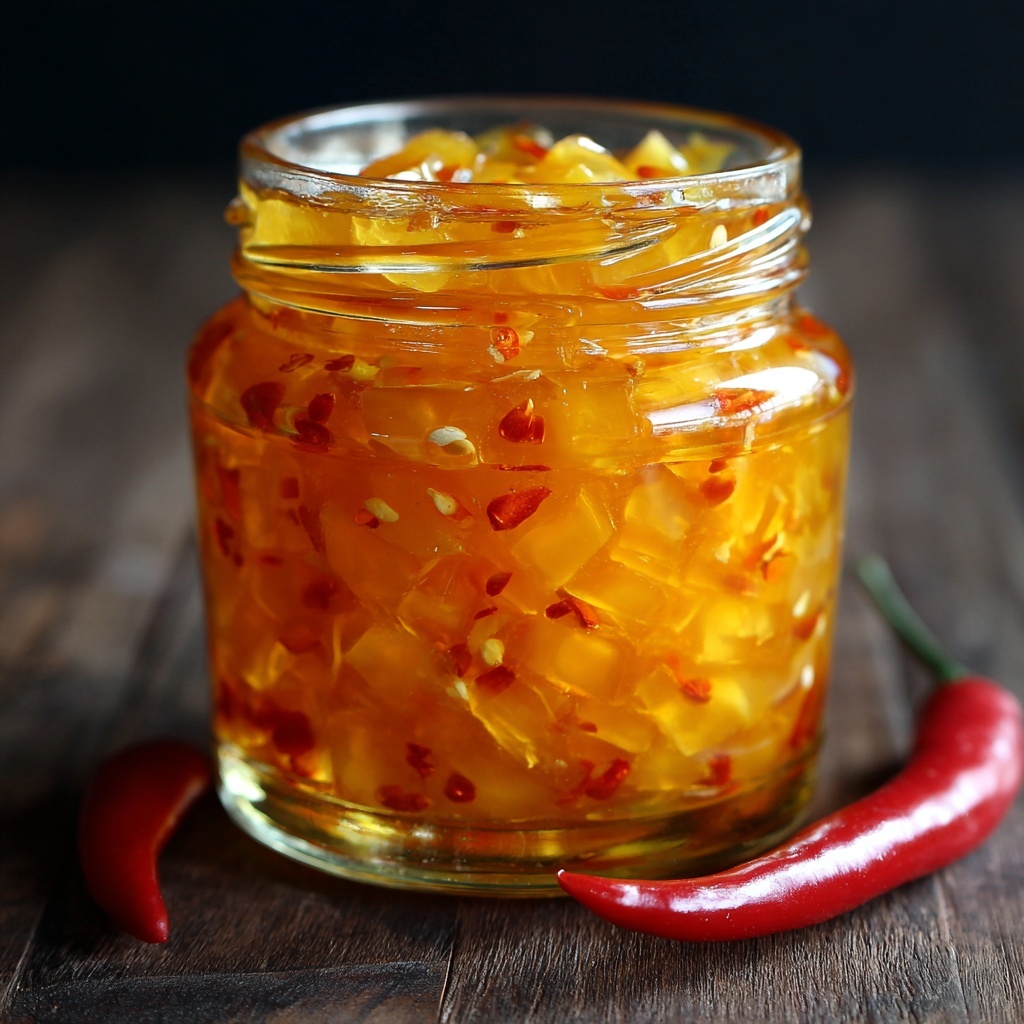
If you love a perfect balance of sweet and spicy that dances on your palate, this Pineapple Habanero Pepper Jelly Recipe is an absolute must-try. It brilliantly combines the tropical sweetness of pineapple with the fiery kick of habanero peppers, delivering a vibrant, zesty jelly that’s bursting with flavor. Whether you’re spreading it on crackers with cream cheese, glazing a roast, or simply enjoying it straight from the jar, this recipe brings a tropical punch with a bold heat that’s simply irresistible. Let’s dive in and transform a handful of simple ingredients into a dazzling homemade treat that will wow your taste buds and your guests alike.
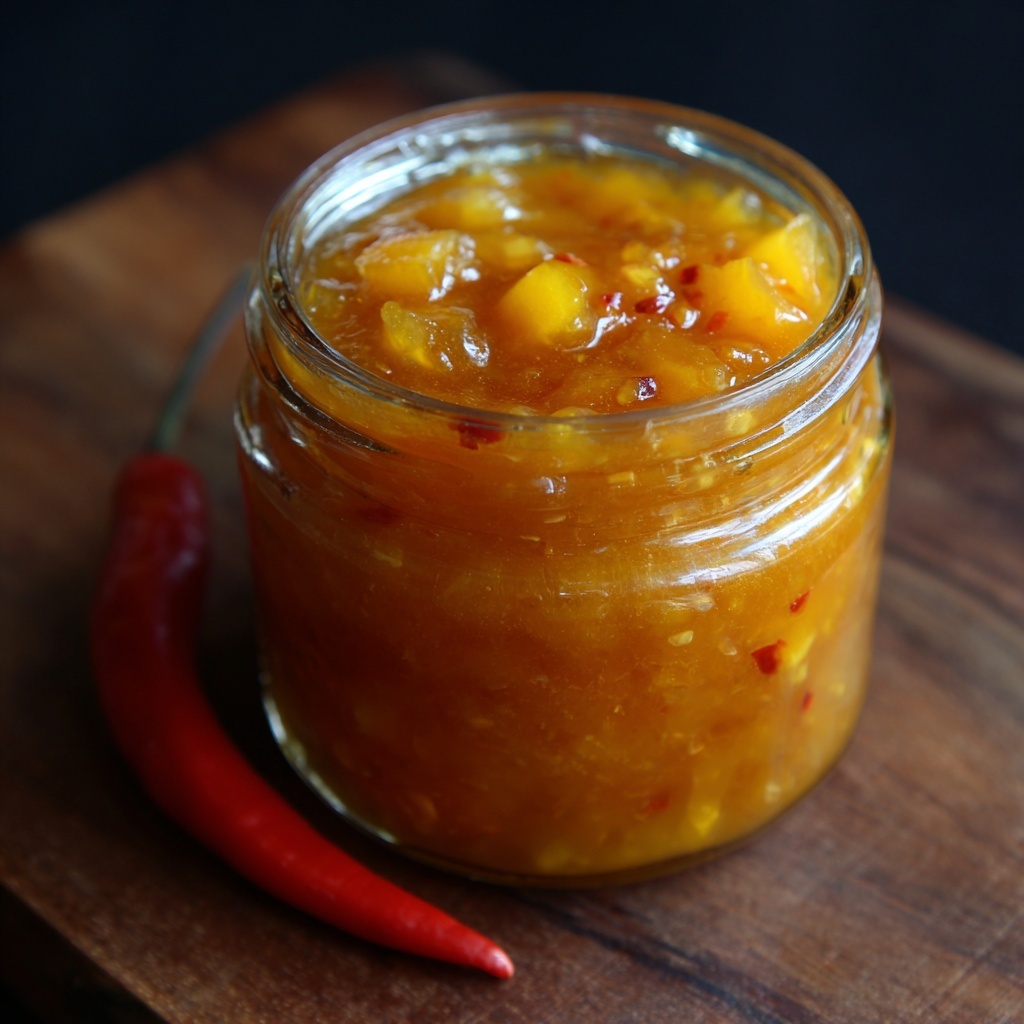
Ingredients You’ll Need
Gathering the right ingredients is half the fun because each one plays a crucial role in creating the perfect harmony of flavors, textures, and color in this jelly. These basics work beautifully together—fruit pectin to guarantee the ideal gel, fresh pineapple for that juicy sweetness, and the fiery habaneros to add character and depth.
- Pineapple Juice: Delivers a bright, tropical sweetness and liquid base for the jelly.
- Apple Cider Vinegar: Adds tangy acidity that balances the sweetness and enhances preservation.
- Fresh Pineapple: Offers fresh pineapple flavor and a juicy texture; canned pineapple can be a handy substitute.
- Habanero Peppers: Injects a bold, spicy kick, but jalapeños work well for a gentler heat.
- Fruit Pectin (e.g., Sure-Jell): Essential for achieving that perfect jelly consistency without any sticky mess.
- Granulated Sugar: Sweetens the jelly richly, helping balance the sharpness of peppers and vinegar.
How to Make Pineapple Habanero Pepper Jelly Recipe
Step 1: Sterilize Your Jars
First things first, ensure your canning jars and lids are completely sterilized. Boil them in water for about 10 minutes to eliminate any bacteria and prevent spoilage. This step is key for safety and to keep your jelly fresh and flavorful.
Step 2: Combine the Fresh Ingredients
In a large saucepan, mix together the pineapple juice, apple cider vinegar, chopped fresh pineapple, and finely minced habanero peppers. This combination forms the flavorful foundation for your jelly, marrying sweetness and heat beautifully.
Step 3: Boil and Add Pectin
Stir in the fruit pectin and bring the mixture to a rolling boil over medium-high heat. This vigorous boil usually takes about 5 minutes, and it activates the pectin’s gelling power to prepare your jelly to thicken properly.
Step 4: Sweeten with Sugar
Quickly add the granulated sugar and stir energetically to dissolve it completely. The sugar not only sweetens your jelly but also balances the sharpness of the vinegar and heat from the habaneros for a smoothly blended flavor.
Step 5: Boil to the Perfect Temperature
Keep boiling the mixture until it reaches 220°F (105°C), or use the plate test for doneness: drop a little jelly on a chilled plate, and if it wrinkles gently when pushed, you’re good to go!
Step 6: Jar Your Jelly
Remove the saucepan from heat and carefully ladle the hot jelly into the sterilized jars, leaving a 1/4 inch of headspace to allow for expansion during processing.
Step 7: Seal and Process the Jars
Wipe jar rims, place lids on top, and screw on the metal bands just until fingertip-tight. Then process the jars in a boiling water bath for 5 to 10 minutes to seal everything perfectly and preserve your jelly’s fresh flavors for months to come.
Step 8: Cool and Listen for the Pop
Set your jars on a wire rack and listen for that satisfying pop sound as they cool. This is your guarantee that your Pineapple Habanero Pepper Jelly Recipe has sealed properly, locking in all that sweet, spicy goodness.
How to Serve Pineapple Habanero Pepper Jelly Recipe
Garnishes
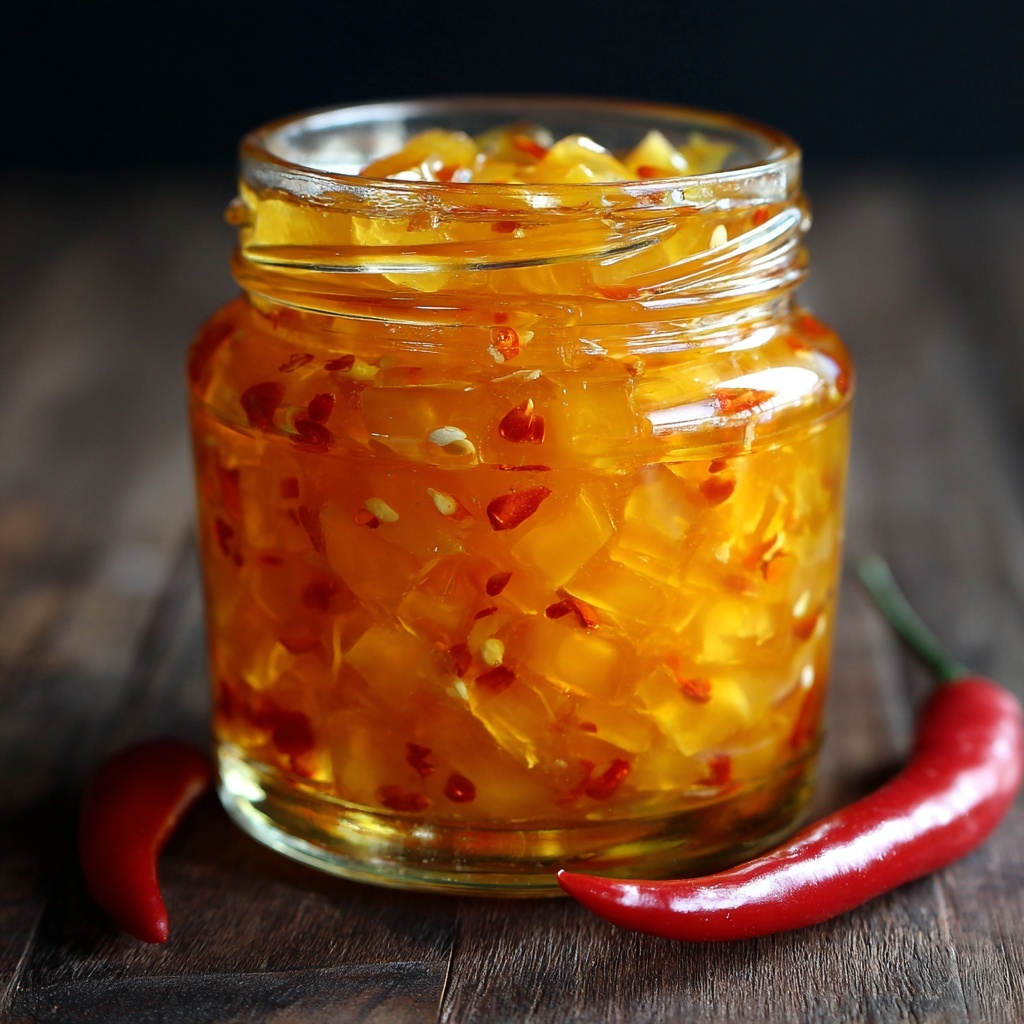
A little garnish can turn your jelly into a star. Try fresh pineapple wedges, thinly sliced jalapeño rings, or a sprinkle of chopped fresh herbs like cilantro or mint to brighten the presentation and add a fresh note that complements the jelly’s tropical spice perfectly.
Side Dishes
This jelly shines paired with savory favorites. Serve it alongside cream cheese and crackers for a classic appetizer, drizzle over grilled chicken or pork for a glossy, flavorful glaze, or melt it into a dipping sauce for spring rolls and fried finger foods to add a sweet heat twist.
Creative Ways to Present
Think beyond the jar: spread the jelly on toasted baguette slices topped with goat cheese, swirl it into yogurt or oatmeal for a spicy surprise, or mix into vinaigrette for a punchy salad dressing. The possibilities with this Pineapple Habanero Pepper Jelly Recipe are endless and always exciting.
Make Ahead and Storage
Storing Leftovers
Once opened, keep your jelly refrigerated and tightly sealed to maintain its vibrant flavor and texture. It will generally stay fresh for up to three weeks—giving you plenty of time to enjoy those sweet and spicy bursts.
Freezing
If you want to stock up, consider freezing some of your jelly in airtight containers or freezer-safe jars. Just leave some headspace as the jelly expands when frozen. Frozen jelly maintains its quality well and thaws quickly whenever you want a tropical sweet heat fix.
Reheating
Warm your jelly gently to bring it back to a pourable consistency for glazing or drizzling. A quick zap in the microwave or a gentle warm water bath works wonders without compromising its vibrant flavor.
FAQs
Can I adjust the heat level in the Pineapple Habanero Pepper Jelly Recipe?
Absolutely! If you prefer a milder jelly, swap the habanero peppers with jalapeños or reduce the quantity. For even more heat, add an extra pepper or include some seeds for extra spice.
What is the best way to sterilize jars for jelly making?
The safest approach is boiling the jars and lids in water for at least 10 minutes. This ensures they are free of bacteria that could spoil your jelly or cause unsafe fermentation.
Can I use canned pineapple instead of fresh?
Yes, canned pineapple works well, just make sure it’s well-drained and preferably in its own juice, not syrup. This substitution saves time while keeping the tropical flavor intact.
How long can I store homemade pineapple habanero jelly?
Unopened and properly processed jars can last up to a year in a cool, dark place. Once opened, refrigeration is necessary, and the jelly should be eaten within three weeks for the best taste and safety.
What are some other uses for this jelly besides spreading on toast?
This jelly is fantastic as a glaze for meats, a spicy-sweet salad dressing ingredient, a topping for cheese plates, or mixed into sauces to add a unique tropical heat dimension.
Final Thoughts
There is something so rewarding about making your own Pineapple Habanero Pepper Jelly Recipe at home—the sweet aroma, the vibrant color, and that perfect zing of heat leading to a jelly that’s truly one of a kind. Don’t hesitate to give this recipe a try; it’s a delicious way to bring a burst of sunshine and spice to your kitchen and dining table. Once you taste it, I bet this jelly will quickly become a cherished favorite to share with friends and family.
Print
Pineapple Habanero Pepper Jelly Recipe
- Prep Time: 15 minutes
- Cook Time: 40 minutes
- Total Time: 55 minutes
- Yield: 16 servings (approximately 4 cups jelly)
- Category: Condiment
- Method: Stovetop
- Cuisine: American
Description
This Pineapple Habanero Pepper Jelly combines the tropical sweetness of pineapple with the fiery kick of habanero peppers to create a vibrant, flavorful jelly. Perfect for adding a sweet heat to your dishes, this jelly is ideal for glazing meats, spreading on toast, or serving with cheese. The jelly is cooked on the stovetop and preserved using a traditional water bath canning method for shelf stability.
Ingredients
Liquids
- 1 cup Pineapple Juice (Substitute with orange juice for a tropical twist)
- 1 cup Apple Cider Vinegar (White vinegar can work as an alternative)
Fruits & Peppers
- 1 cup Fresh Pineapple (Use drained canned pineapple for convenience)
- 2 Habanero Peppers (Use jalapeños for a milder option)
Other Ingredients
- 1 packet Fruit Pectin (e.g., Sure-Jell) (Check for low-sugar options if needed)
- 4 cups Granulated Sugar (Consider a sugar substitute designed for canning)
Instructions
- Sterilize jars: Boil canning jars and lids for about 10 minutes to ensure they are sterilized and safe for preserving your jelly.
- Combine ingredients: In a large saucepan, mix together pineapple juice, apple cider vinegar, chopped fresh pineapple, and minced habanero peppers for a balanced sweet and spicy base.
- Boil mixture: Add the fruit pectin to the saucepan and stir thoroughly. Bring the mixture to a rolling boil and maintain it vigorously for about 5 minutes to activate the pectin and thicken the jelly.
- Add sugar: Quickly add the granulated sugar while stirring vigorously to dissolve it completely and ensure an even sweetness throughout the jelly.
- Check temperature: Continue boiling the mixture until it reaches 220°F (105°C), the gel point for jelly. Alternatively, perform the plate test by placing a small spoonful on a cold plate to check if it sets properly.
- Ladle into jars: Carefully ladle the hot jelly into the sterilized jars, leaving a 1/4 inch headspace at the top to allow for expansion during processing.
- Seal jars: Place the sterilized lids on each jar and tighten the metal bands securely but not overly tight to allow for air to escape during processing.
- Process jars: Submerge the sealed jars in a boiling water bath for 5 to 10 minutes, which ensures proper preservation and safety.
- Cool and listen: Remove the jars and place them on a wire rack to cool. Listen for the characteristic ‘pop’ sound indicating that the jars have sealed properly.
Notes
- If you prefer milder heat, substitute habaneros with jalapeño peppers.
- You can use orange juice instead of pineapple juice for a variation in flavor.
- Ensure jars and lids are properly sterilized to prevent contamination and spoilage.
- Check jelly set using a digital thermometer or the traditional plate test for perfect consistency.
- Process jars in boiling water bath for safe canning and longer shelf life.
- Store sealed jars in a cool, dark place. Refrigerate after opening.