
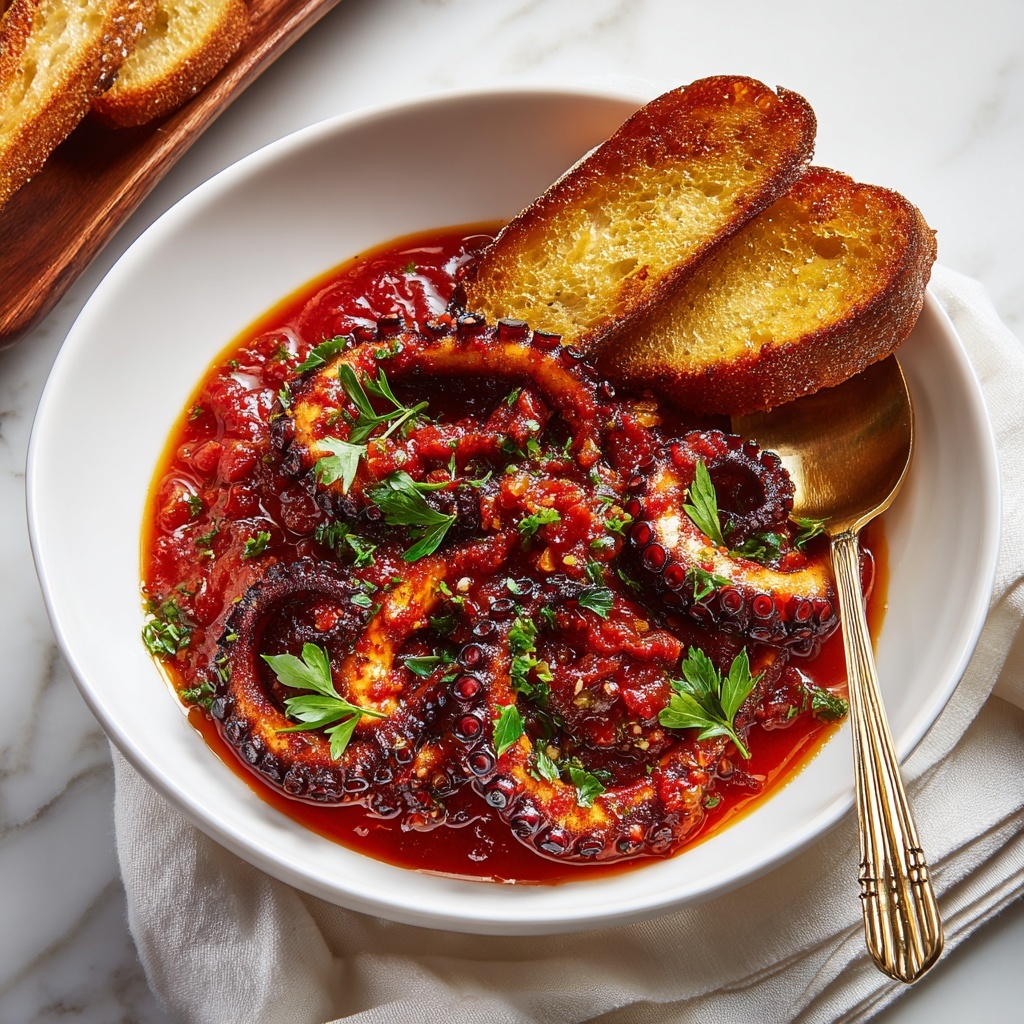
If you are looking to bring a burst of Mediterranean flavor straight to your dinner table, this Polipetti in Purgatorio Recipe is an absolute treasure. Imagine tender baby octopus slowly simmered in a rich, fragrant tomato sauce that balances spicy garlic, tangy capers, and bright herbs—each bite is a dance of textures and bold tastes. It’s a dish that feels like a warm hug from Italy, simple yet deeply satisfying, perfect for those who adore seafood and love exploring new, authentic flavors.
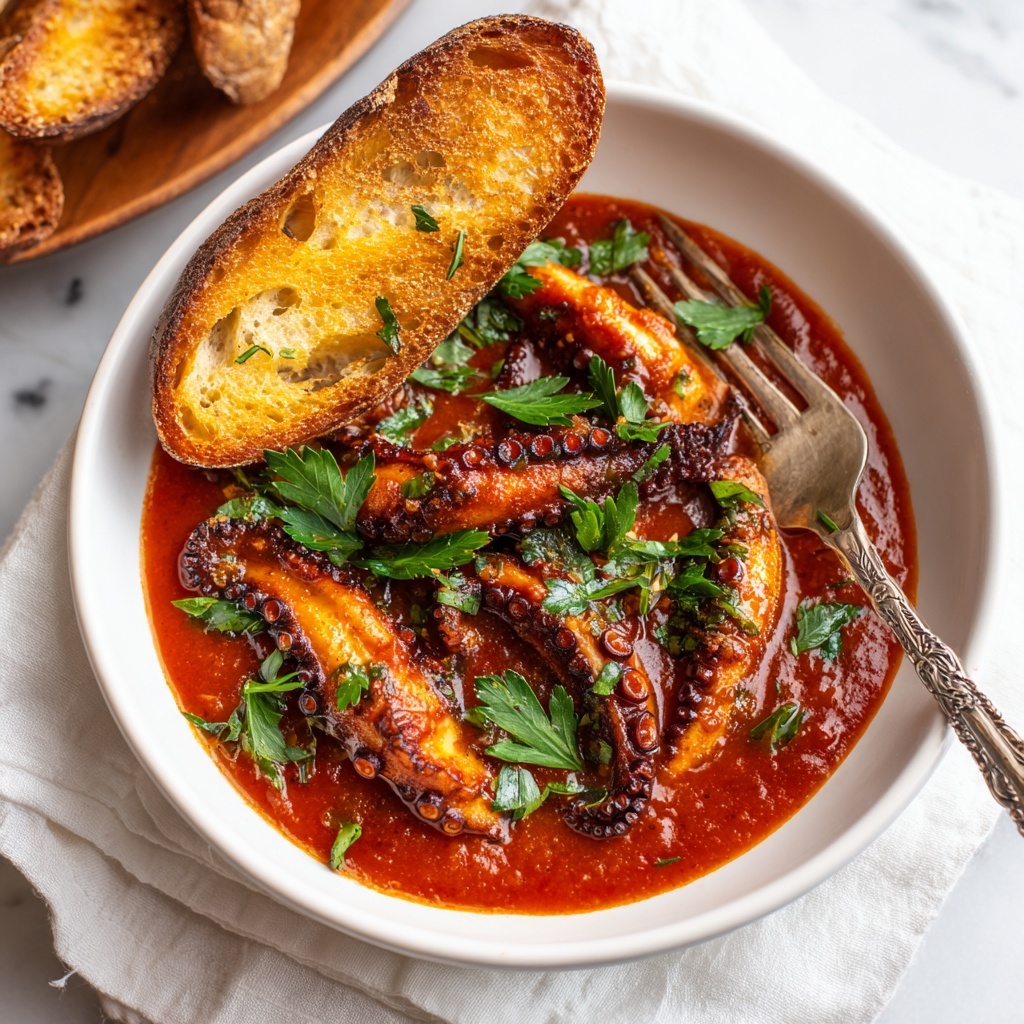
Ingredients You’ll Need
The beauty of this Polipetti in Purgatorio Recipe lies in its simplicity. Each ingredient plays an important role—bringing freshness, spice, acidity, or depth to the dish, creating a harmonious blend that lets the octopus shine.
- 2 pounds baby octopus cleaned: The star of the dish, tender and ready to soak in all those rich flavors.
- 3 tablespoons olive oil: Adds silkiness and richness while sautéing the aromatics.
- 4 cloves garlic thinly sliced: Brings an irresistible pungency and warmth.
- 1/2 teaspoon crushed red pepper flakes: A gentle kick of heat to awaken your palate.
- 1/2 cup dry white wine: Adds acidity and depth, helping tenderize the octopus and elevate the sauce.
- 1 can crushed tomatoes: The heart of the sauce, offering sweetness and vibrant color.
- 2 tablespoons tomato paste: Concentrates the tomato flavors, giving the sauce a luscious intensity.
- 1 teaspoon salt: Essential for seasoning and enhancing all flavors.
- 1/2 teaspoon black pepper: Adds subtle warmth and complexity.
- 2 tablespoons fresh parsley chopped: A fresh, herbaceous finish to brighten every spoonful.
- 1 tablespoon capers drained: A briny punch that cuts through the richness perfectly.
- 1 teaspoon dried oregano: Classic Mediterranean herb that ties everything together.
- Crusty bread for serving: For savoring every drop of that enchanting sauce.
How to Make Polipetti in Purgatorio Recipe
Step 1: Preparing the Octopus
Start by rinsing your baby octopus thoroughly and patting it dry. This helps ensure the octopus browns nicely rather than steaming. Browning adds flavor and texture that makes a huge difference in the final dish.
Step 2: Sautéing the Aromatics
Heat the olive oil in a large, deep skillet or Dutch oven over medium heat. Add the thinly sliced garlic and crushed red pepper flakes, stirring gently until fragrant—this only takes about a minute. This step infuses the oil with warm, spicy garlic aromas that set the stage for the octopus.
Step 3: Browning the Octopus
Now, add the baby octopus to the skillet and cook for 5 to 7 minutes. The goal is to get some light browning on the octopus and let it start to release its juices. This transforms your seafood into a tender, flavorful centerpiece.
Step 4: Deglazing and Simmering
Pour in the dry white wine and let it simmer for a couple of minutes. This helps lift all those delicious browned bits from the pan and infuses the octopus with subtle tang. Then stir in the crushed tomatoes, tomato paste, salt, black pepper, capers, and oregano.
Step 5: Slow Cooking
Reduce the heat to low, cover your pot, and let the magic happen. Simmer the octopus for 35 to 45 minutes, stirring occasionally. This gentle cooking allows the octopus to become tender and absorb all that vibrant tomato and herb flavor.
Step 6: Final Touches
Right before serving, sprinkle your freshly chopped parsley over the dish. This final touch adds a burst of green color and fresh aroma that makes the whole plate sing.
How to Serve Polipetti in Purgatorio Recipe
Garnishes
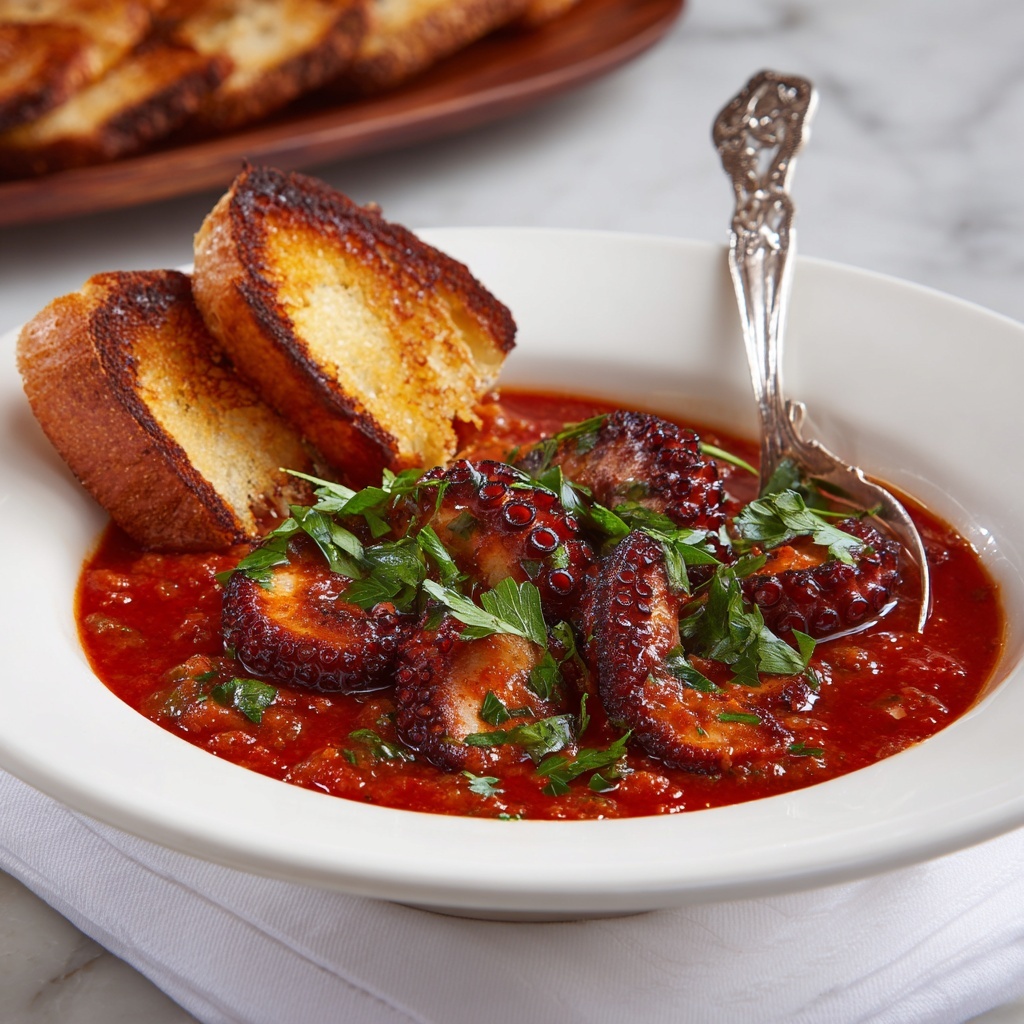
A simple sprinkle of fresh parsley is all you need to elevate your Polipetti in Purgatorio Recipe. For an extra layer of color and flavor, consider adding a few lemon wedges on the side to squeeze over the octopus. It brightens the dish wonderfully.
Side Dishes
This dish pairs beautifully with crusty bread, perfect for mopping up the sumptuous tomato sauce. For heartier options, serve it alongside creamy polenta or your favorite pasta to make it a full, comforting meal.
Creative Ways to Present
For a stunning presentation, serve the octopus in a rustic, deep dish with the sauce ladled generously over the top, then drizzle a little extra virgin olive oil around the edges. You can also place small bowls of the octopus and sauce atop grilled bread slices for elegant appetizers.
Make Ahead and Storage
Storing Leftovers
Place any leftovers in an airtight container and store them in the refrigerator. The flavors tend to deepen overnight, making the Polipetti in Purgatorio Recipe even more delicious the next day. Consume within 2 to 3 days for best quality.
Freezing
This dish freezes well, making it perfect if you want to prepare in advance. Place the cooled stew in a freezer-safe container, leaving some space for expansion. Freeze for up to 2 months. Thaw overnight in the refrigerator before reheating gently.
Reheating
Reheat slowly on the stovetop over low heat, stirring occasionally to prevent sticking. Adding a splash of water or white wine can help loosen the sauce if it has thickened too much in the fridge.
FAQs
What makes this Polipetti in Purgatorio Recipe different from other octopus dishes?
This recipe focuses on slow-simmering baby octopus in a spicy, tomato-based sauce that really highlights the Mediterranean flavors without overwhelming the natural taste of the seafood.
Can I use regular octopus instead of baby octopus?
Yes, but cooking times will be longer since regular octopus is generally larger and tougher. Adjust simmering accordingly to ensure tenderness.
Is it necessary to use white wine?
White wine adds acidity and complexity, but if you prefer not to use alcohol, you can substitute with a splash of vegetable broth and a squeeze of lemon juice.
What if I want a milder version of the dish?
Simply reduce or omit the crushed red pepper flakes. The dish will still have deep, rich flavors from the tomatoes and herbs without the heat.
Can I make this dish gluten-free?
Absolutely! Just serve it with gluten-free bread or over gluten-free pasta or polenta to keep the meal completely gluten-free.
Final Thoughts
This Polipetti in Purgatorio Recipe is truly a celebration of simple ingredients coming together in a perfect harmony of flavor and texture. It’s the kind of dish that makes you feel like you’ve been transported to the sunny Mediterranean coast with every bite. I encourage you to give this recipe a try—it’s easy to prepare, impressive on the table, and utterly delicious. Happy cooking and even happier eating!
Print
Polipetti in Purgatorio Recipe
- Prep Time: 15 minutes
- Cook Time: 50 minutes
- Total Time: 1 hour 5 minutes
- Yield: 4 servings
- Category: Main Course
- Method: Stovetop
- Cuisine: Italian
- Diet: Low Lactose
Description
Polipetti in Purgatorio is a classic Italian seafood stew featuring tender baby octopus simmered in a flavorful tomato sauce with garlic, capers, and a hint of crushed red pepper for a subtle kick. Perfectly paired with crusty bread, this dish is a comforting and elegant main course from Mediterranean cuisine.
Ingredients
Octopus and Sauce
- 2 pounds baby octopus, cleaned
- 3 tablespoons olive oil
- 4 cloves garlic, thinly sliced
- 1/2 teaspoon crushed red pepper flakes
- 1/2 cup dry white wine
- 1 can crushed tomatoes (about 14 ounces)
- 2 tablespoons tomato paste
- 1 teaspoon salt
- 1/2 teaspoon black pepper
- 1 tablespoon capers, drained
- 1 teaspoon dried oregano
- 2 tablespoons fresh parsley, chopped
To Serve
- Crusty bread
Instructions
- Prepare the Octopus: Rinse the baby octopus thoroughly and pat dry with paper towels to remove excess moisture, which ensures better browning during cooking.
- Sauté Aromatics: Heat olive oil in a large deep skillet or Dutch oven over medium heat. Add thinly sliced garlic and crushed red pepper flakes, cooking for about 1 minute until fragrant but not browned.
- Cook Octopus: Add the baby octopus to the skillet and cook for 5 to 7 minutes until they are lightly browned and begin releasing their natural juices.
- Deglaze with Wine: Pour in the dry white wine and allow the mixture to simmer for 2 minutes, letting the alcohol evaporate and the flavors concentrate.
- Add Tomato Base: Stir in crushed tomatoes, tomato paste, salt, black pepper, capers, and dried oregano to the pan. Mix well to combine all ingredients.
- Simmer: Reduce the heat to low, cover the skillet or Dutch oven, and let the octopus simmer gently for 35 to 45 minutes. Stir occasionally to prevent sticking and ensure even cooking. The octopus should become tender and infused with the rich tomato sauce.
- Finish and Garnish: Once tender, sprinkle chopped fresh parsley over the stew for a burst of fresh flavor. Serve immediately with crusty bread to soak up the delicious sauce.
Notes
- Cooking time may vary depending on the size of the octopus; adjust simmering time until tender but not rubbery.
- Avoid overcooking the octopus to maintain its tender texture.
- This dish pairs beautifully with pasta or creamy polenta for a heartier meal.
- Use good quality olive oil and white wine to enhance the flavors.
- Capers add a nice briny contrast; rinse them if they are particularly salty.