Description
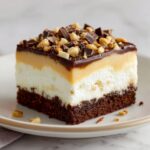
This Chocolate Peanut Butter Poke Cake is a rich, moist chocolate cake infused with a creamy peanut butter ganache and topped with a fluffy peanut butter whipped cream. The cake is perfectly sweetened and features a delightful texture from the peanut-studded garnish. Ideal for celebrations or an indulgent treat, this dessert combines the classic flavors of chocolate and peanut butter in a unique and luscious poke cake form.
Ingredients
Scale
Dry Ingredients
- 2 cups (396g) granulated sugar
- 3 cups (360g) all-purpose flour
- ½ cup (42g) unsweetened cocoa powder (Dutch-process or natural)
- 2 teaspoons baking soda
- 1¼ teaspoons table salt
- 1 teaspoon espresso powder (optional)
Wet Ingredients & Cake Base
- 2 cups (454g) cold water
- ⅔ cup (132g) vegetable oil
- 2 tablespoons (28g) cider vinegar or white vinegar
- 2 teaspoons pure vanilla extract
Ganache
- ¾ cup (203g) smooth peanut butter
- ⅓ cup (57g) milk chocolate, finely chopped
- 1 cup (227g) heavy cream
Topping
- 1 cup (227g) cold heavy cream
- 1 teaspoon pure vanilla extract
- ½ cup (56g) confectioners’ sugar
- ½ cup (135g) smooth peanut butter
Garnish
- ¼ cup (36g) roasted peanuts, roughly chopped
- 2 tablespoons (22g) mini chocolate chips (optional)
Instructions
- Make the Cake: Preheat your oven to 350°F (175°C) and lightly grease a 9×13-inch baking pan to prevent sticking. In a large mixing bowl, whisk together the dry ingredients: granulated sugar, all-purpose flour, cocoa powder, baking soda, salt, and optional espresso powder to combine evenly. Add the cold water, vegetable oil, vinegar, and vanilla extract, stirring until the batter is smooth and well incorporated. Pour this batter evenly into the prepared pan.
- Bake the Cake: Place the pan in the oven and bake for 35 to 40 minutes, or until a toothpick inserted into the center of the cake comes out clean, indicating it is fully baked. Remove the cake and allow it to cool for about 10 minutes to make it easier to handle.
- Poke the Cake: Using the handle of a wooden spoon, poke holes all over the warm cake. This step allows the ganache to seep into the cake, making it moist and flavored throughout.
- Make the Ganache: In a heat-safe bowl, add the smooth peanut butter and finely chopped milk chocolate. Heat the heavy cream in a small saucepan over medium heat until it starts to steam but does not boil. Pour the hot cream over the peanut butter and chocolate mixture and let it sit for 1 to 2 minutes to melt the chocolate, then whisk thoroughly until smooth and glossy.
- Pour Ganache Over Cake: Immediately pour the ganache evenly over the warm cake, making sure it fills the holes and covers the surface. This step infuses the cake with a rich peanut butter chocolate flavor. Allow the cake to cool completely to let the ganache set properly.
- Prepare the Topping: In a chilled mixing bowl, whip the cold heavy cream with vanilla extract until soft peaks form. Gradually add confectioners’ sugar and smooth peanut butter, continuing to whip until stiff peaks form, creating a fluffy and rich peanut butter topping.
- Top the Cake: Spread the whipped peanut butter topping evenly over the cooled ganache-covered cake, adding a light and creamy layer on top.
- Garnish and Chill: Sprinkle roughly chopped roasted peanuts and mini chocolate chips over the top for added texture and visual appeal. Chill the cake in the refrigerator for at least 1 hour to allow all layers to set and flavors to meld before slicing and serving.
Notes
- The espresso powder enhances the chocolate flavor but can be omitted if unavailable or undesired.
- Using cold water and cold cream helps achieve the best cake texture and whipped topping consistency.
- Make sure not to boil the cream when preparing ganache to preserve smoothness.
- Vinegar reacts with baking soda to help the cake rise and become tender; cider or white vinegar both work well.
- For a thicker ganache, you can slightly reduce the amount of cream or increase chocolate, but the given proportions yield a smooth pourable ganache.
- Chilling the cake before serving improves sliceability and flavor development.