
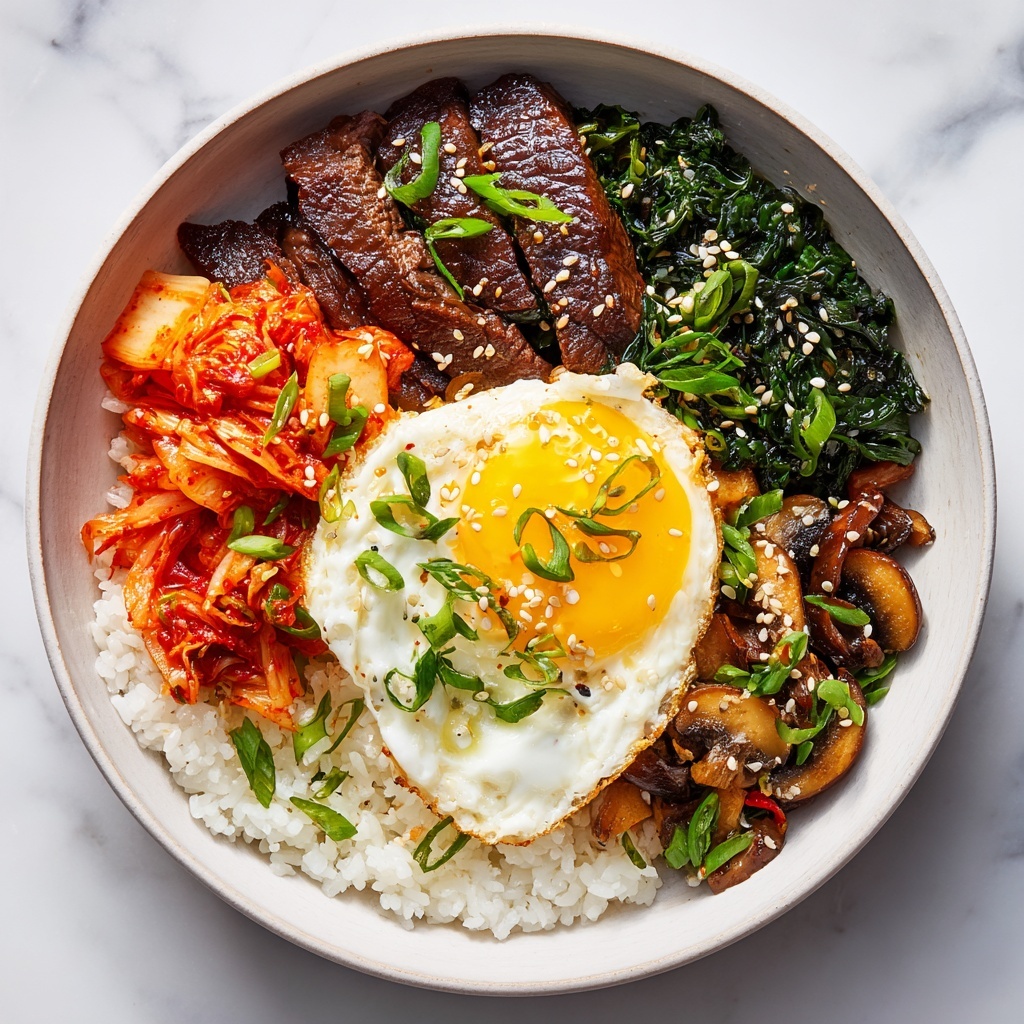
There is something utterly satisfying about a bowl filled with vibrant colors, fresh textures, and bold flavors, and that is exactly what the Korean Seaweed Bibimbap Bowls Recipe brings to your table. This dish perfectly balances the earthiness of sautéed shiitake mushrooms, the crunch of fresh cucumbers and carrots, the gentle bite of blanched bean sprouts, and the rich creaminess of a fried egg, all layered over fluffy white rice. The addition of crispy nori strips and a drizzle of toasted sesame oil takes it all to the next level, making every bite a delightful burst of authentic Korean flavors that feel both comforting and exciting.
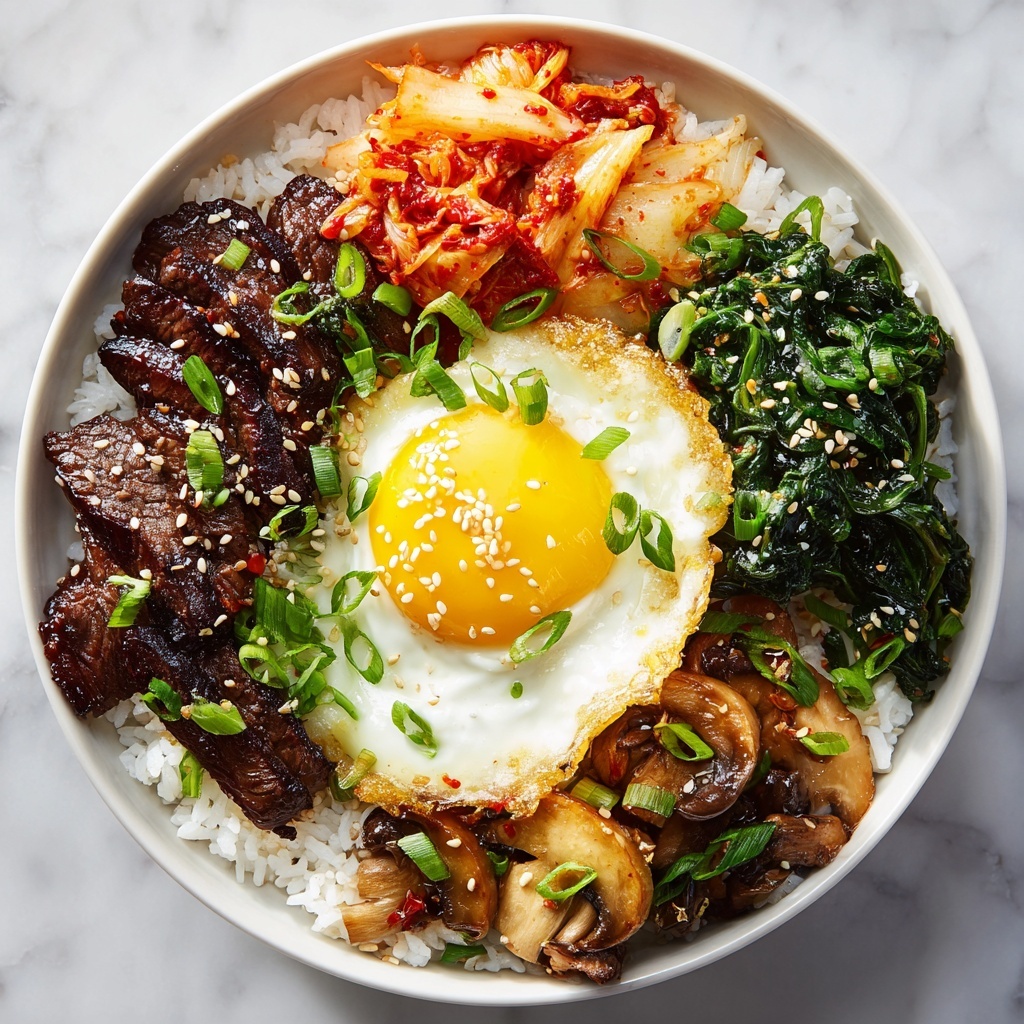
Ingredients You’ll Need
Getting ready to make this Korean Seaweed Bibimbap Bowls Recipe is a breeze with simple, fresh ingredients that each play a crucial role in building texture, flavor, and a beautiful array of colors on your plate. Each component is approachable yet essential to create the authentic and satisfying bowl you’ll love.
- 2 cups cooked white rice: The perfect neutral base that soaks up all the wonderful flavors.
- 1 cup baby spinach: Adds a lovely green color and mild, slightly earthy taste when sautéed.
- 1 cup bean sprouts: Brings crispness and freshness, giving the bowl a great contrast.
- 1 medium carrot, julienned: Provides vivid color and a natural sweetness.
- 1 small cucumber, julienned: Adds crunch and a cool, refreshing element to balance deeper flavors.
- 1 cup shiitake mushrooms, sliced: Earthy and meaty, they soak up the soy sauce for umami depth.
- 1 tablespoon vegetable oil: Essential for sautéing your mushrooms and spinach just right.
- 1 tablespoon soy sauce: Infuses mushrooms with that classic savory flavor.
- 1 tablespoon sesame oil: A fragrant finishing touch that ties all the flavors together beautifully.
- 1 teaspoon sesame seeds: Adds a subtle nutty crunch and visual appeal.
- 4 large eggs: Cooked sunny-side up, they lend richness and a creamy yolk that melds with every bite.
- 4 sheets of nori (seaweed), cut into strips: The star ingredient for that satisfying crisp texture and oceanic taste.
- Salt and pepper to taste: Simple seasonings to bring out the natural flavors of each ingredient.
How to Make Korean Seaweed Bibimbap Bowls Recipe
Step 1: Sauté the Mushrooms
Begin by heating vegetable oil in a large skillet over medium heat. Toss in the sliced shiitake mushrooms and cook them gently for about five minutes until they turn soft and fragrant. Then drizzle the soy sauce and give everything a good stir for another minute to let that deep umami flavor soak in. Once done, set them aside to keep warm.
Step 2: Wilt the Spinach
Using the same skillet, add the fresh baby spinach and sauté for just a couple of minutes until it wilts but still retains that lovely green color. Season lightly with salt and pepper to enhance the natural spinach flavor. This quick step keeps the spinach tender while locking in its nutrients.
Step 3: Blanch the Bean Sprouts
Bring a small pot of water to a rolling boil, then gently drop in the bean sprouts. Let them blanch for about two minutes, just enough to slightly soften but keep their fresh crunch. Remove and rinse them under cold water to stop the cooking process and maintain that clean, crisp bite.
Step 4: Fry the Eggs
In a separate pan, fry the eggs sunny-side up, or however you prefer your eggs. The goal is a runny yolk that will mingle with the rice and veggies once assembled, creating a luscious, rich sauce throughout the bowl.
Step 5: Assemble the Bowl
Now the fun part: dividing the cooked white rice evenly among four bowls. On top, artistically arrange sautéed mushrooms, wilted spinach, blanched bean sprouts, and the fresh julienned carrots and cucumbers. This layering packs the bowl full of vibrant colors and contrasting textures that make it exciting to eat.
Step 6: Add the Finishing Touches
Place a fried egg gently on top of each bowl, then drizzle sesame oil over everything. Sprinkle with toasted sesame seeds and garnish the sides with crisp strips of nori. These final touches elevate the entire dish, giving you a beautiful mix of flavors, shapes, and tastes in every bite.
Step 7: Serve and Enjoy
Serve the Korean Seaweed Bibimbap Bowls Recipe immediately while everything is still warm and fresh. Encourage everyone to mix their bowl thoroughly before digging in to experience the full flavor combination that makes bibimbap so addictive.
How to Serve Korean Seaweed Bibimbap Bowls Recipe
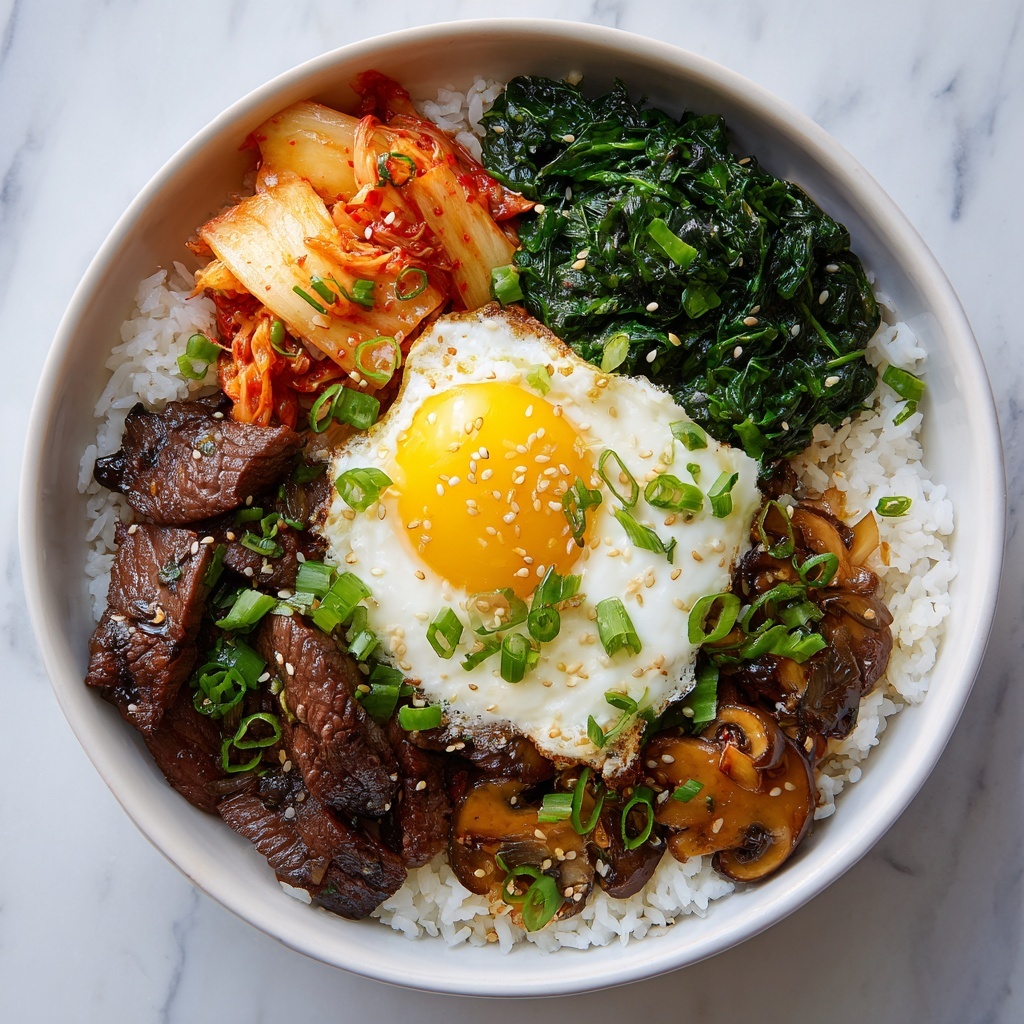
Garnishes
For garnishes, don’t shy away from extra sesame seeds, a sprinkle of gochujang sauce if you like a bit of spice, or even a few pickled radish slices on the side. These additions can brighten the bowl and add layers of taste that invite everyone to customize their own experience.
Side Dishes
This dish pairs wonderfully with traditional Korean side dishes like kimchi, which brings a tangy and spicy punch, or simple miso soup to keep things light and comforting. Fresh cucumber kimchi or a small bowl of seasoned seaweed salad will also harmonize beautifully.
Creative Ways to Present
Try serving the bowls in individual stone pots for an authentic Korean touch that keeps your bibimbap warm longer. You can also experiment with layering ingredients in clear glass bowls to showcase the vibrant colors, turning your kitchen creation into a stunning centerpiece.
Make Ahead and Storage
Storing Leftovers
If you have leftovers, store the components separately to maintain freshness — rice in one container, sautéed veggies and mushrooms in another, and keep the nori and eggs aside. This way, textures stay intact, and flavors don’t get muddled.
Freezing
While rice and vegetables can be frozen, the best texture comes from fresh preparation, especially for the spinach and cucumbers. If you must freeze, freeze only the cooked rice and mushrooms and thaw slowly to prevent sogginess. Nori and eggs are best fresh and not frozen.
Reheating
Reheat the rice and sautéed mushrooms gently in a skillet or microwave. Add a small splash of water to keep the rice moist. Reheat the spinach lightly or add it fresh if you prefer. Reheat eggs carefully or better yet, fry fresh if possible for the best texture.
FAQs
Can I use brown rice instead of white rice?
Absolutely! Brown rice adds a nutty flavor and extra fiber, making this dish even healthier. Just be mindful it may change the texture slightly, but the flavors remain delicious.
Is this recipe vegetarian?
Yes, this Korean Seaweed Bibimbap Bowls Recipe is vegetarian-friendly as written. For a vegan version, simply replace the eggs with tofu and make sure your soy sauce is vegan-certified.
Can I add protein like beef or chicken?
Definitely! Thinly sliced marinated beef or grilled chicken pairs beautifully with bibimbap. Simply cook the meat separately and add it as another topping to create a heartier meal.
What is the best way to cut the nori?
Use kitchen scissors to cut nori sheets into thin strips or small squares. This makes them easier to mix in and enjoy with other ingredients, while providing that signature seaweed crunch.
How spicy is this dish?
This Korean Seaweed Bibimbap Bowls Recipe is naturally mild and perfect for anyone who prefers less heat. You can easily add spiciness by including gochujang or chili flakes to suit your taste.
Final Thoughts
There is a special kind of joy in making and sharing the Korean Seaweed Bibimbap Bowls Recipe, whether for a family meal or a dinner with friends. Its colorful presentation, lively textures, and harmonious flavors promise a memorable dining experience that will have everyone coming back for seconds. Give it a try and watch this dish become one of your newfound favorites in no time!
Print
Korean Seaweed Bibimbap Bowls Recipe
- Prep Time: 10 minutes
- Cook Time: 20 minutes
- Total Time: 30 minutes
- Yield: 4 servings
- Category: Main Dish
- Method: Stovetop
- Cuisine: Korean
- Diet: Vegetarian
Description
Enjoy a vibrant and nutritious Korean Seaweed Bibimbap Bowl featuring sautéed shiitake mushrooms, blanched bean sprouts, wilted spinach, fresh julienned vegetables, and a perfectly fried egg, all served over warm white rice and garnished with crunchy nori strips and toasted sesame seeds. This easy-to-make dish brings authentic Korean flavors to your table in just 30 minutes.
Ingredients
Grains and Vegetables
- 2 cups cooked white rice
- 1 cup baby spinach
- 1 cup bean sprouts
- 1 medium carrot, julienned
- 1 small cucumber, julienned
- 1 cup shiitake mushrooms, sliced
Oils and Seasonings
- 1 tablespoon vegetable oil
- 1 tablespoon soy sauce
- 1 tablespoon sesame oil
- 1 teaspoon sesame seeds
- Salt and pepper to taste
Protein
- 4 large eggs
Garnish
- 4 sheets of nori (seaweed), cut into strips
Instructions
- Sauté mushrooms: In a large skillet, heat the vegetable oil over medium heat. Add the sliced shiitake mushrooms and sauté for about 5 minutes until tender. Stir in soy sauce and cook for an additional minute. Remove from heat and set aside.
- Wilt spinach: Using the same skillet, add the baby spinach and sauté until wilted, about 2 minutes. Season with salt and pepper to taste. Remove from heat and set aside.
- Blanch bean sprouts: In a small pot, bring water to a boil. Gently add the bean sprouts and blanch for about 2 minutes. Drain and rinse under cold water to stop cooking. Set aside.
- Fry eggs: In a separate pan, fry the eggs sunny-side up or cook until your preferred doneness. Set aside.
- Assemble bowls: Divide the cooked white rice evenly among four bowls. Top each bowl with sautéed mushrooms, wilted spinach, blanched bean sprouts, julienned carrot, and cucumber.
- Add egg and garnish: Place a fried egg on top of each bowl. Drizzle with sesame oil and sprinkle with sesame seeds. Add strips of nori on the side for added texture and flavor.
- Serve: Serve immediately, encouraging each person to mix their bowl thoroughly before eating to enjoy all the flavors combined.
Notes
- Use short grain rice for a more authentic Korean bibimbap texture.
- Feel free to substitute shiitake mushrooms with cremini or button mushrooms if unavailable.
- Adjust soy sauce and sesame oil quantities based on your taste preferences and dietary needs.
- For a vegan variation, omit the fried egg or replace it with tofu scramble.
- Adding a dollop of gochujang (Korean chili paste) can add a spicy kick to the dish.